My Colonel Ordered Me to Fly the F-16 Our Crew Chief Had Grounded. At 30,000 Feet, the Cockpit Went Black. When I Finally Saw the Runway Again, the Men Waiting Below Had Orders to Take the One Thing I’d Brought Back. aviet7
The first time Colonel Grant Mercer told me to pull the ejection handle, I still had enough air in my lungs to answer.
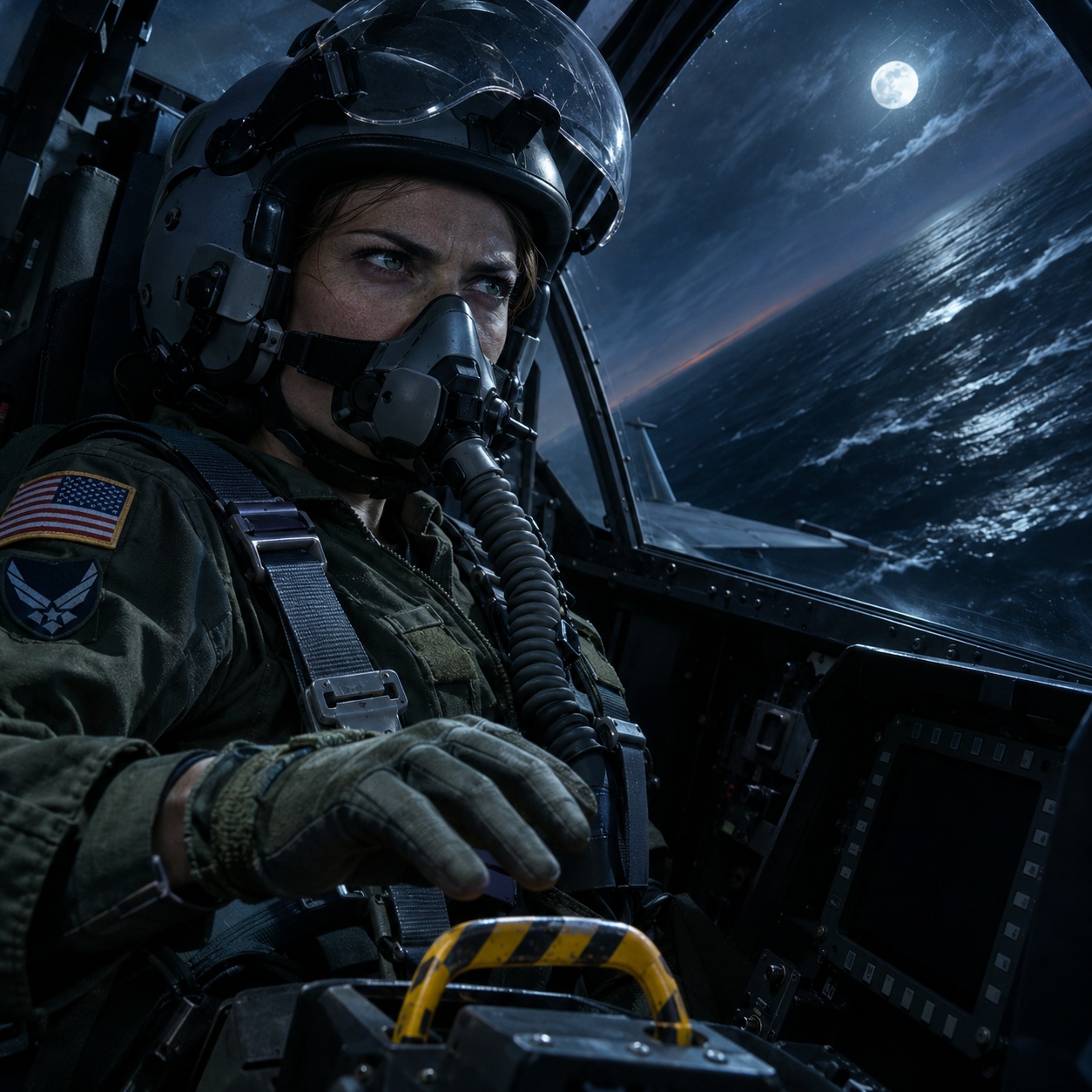
The second time, I could barely see my hand.
Two days later, I was supposed to testify that he’d been clearing unsafe jets for flight. Now the jet with his signature on it was falling toward the Atlantic, and my wingman was begging me to get out.
That morning, my biggest worry had been whether Master Sergeant Joe Harlan would show up to testify with me.
Joe had worked on fighters longer than I’d been old enough to drive. He kept a framed school picture of his granddaughter in his toolbox, under the lid where nobody could get grease on it. For six months, he’d been saving copies of maintenance reports while I put together a complaint for the inspector general. According to our wing’s official numbers, ninety-eight percent of our aircraft were ready. I knew crews who’d stopped going home on time because they were trying to make those numbers true.
The alert sounded before sunrise at Shaw Air Force Base. Lieutenant Ben “Rook” Ellis came through the briefing-room door carrying two coffees and set mine beside my elbow. He’d been my wingman long enough to know I’d forget to drink it.
The map showed a red track moving up the Carolina coast. An unmanned aircraft had ignored calls to identify itself and was closing on a Navy carrier offshore. The Navy was taking defensive action. We were the only fighters already on alert close enough to get there first.
“Ellis, you’re in your assigned aircraft,” Mercer said. “Ward, you’re taking 214.”
Rook looked at me. Everyone on the flight line knew that tail number. The jet had spent so much time in the hangar that somebody had once hung a paper mailbox on its ladder.
“What happened to my jet, sir?”
“Hydraulic leak. It’s grounded.”
“I just walked around it with the crew chief.”
“Then you’ll appreciate how quickly maintenance caught it.”
He slid the release sheet across the table. Tail 214 had a history of engine trouble and electrical faults that disappeared on the ground and came back in flight. I’d included that aircraft in my complaint. Mercer knew exactly which pages.
“Who cleared it?” I asked.
“I did.”
I let the room hear the next question. “Did Sergeant Harlan sign the release?”
Mercer leaned down until his hand was beside my untouched coffee. “If you’re unwilling to fly, Captain Ward, I’ll record that. I imagine it’ll come up at your interview.”
Under the jet, Joe was waiting with his headset around his neck. He looked as if he’d been standing in the cold for hours.
“I grounded her,” he said. “I still have the original sheet.”
“Where?”
“Somewhere he can’t reach it.”
For a second neither of us moved. I wanted to tell him to go straight to the inspector general. I wanted to ask him to stand in front of the ladder so I’d have one more reason to stay on the ground. Then someone called from the next aircraft that Rook was ready. He was twenty-six and good enough to know exactly how little a pilot can do when the aircraft ahead of him is faster and the distance keeps growing. My jet carried the equipment we needed to reach the threat in time.
“Keep that sheet,” I told Joe.
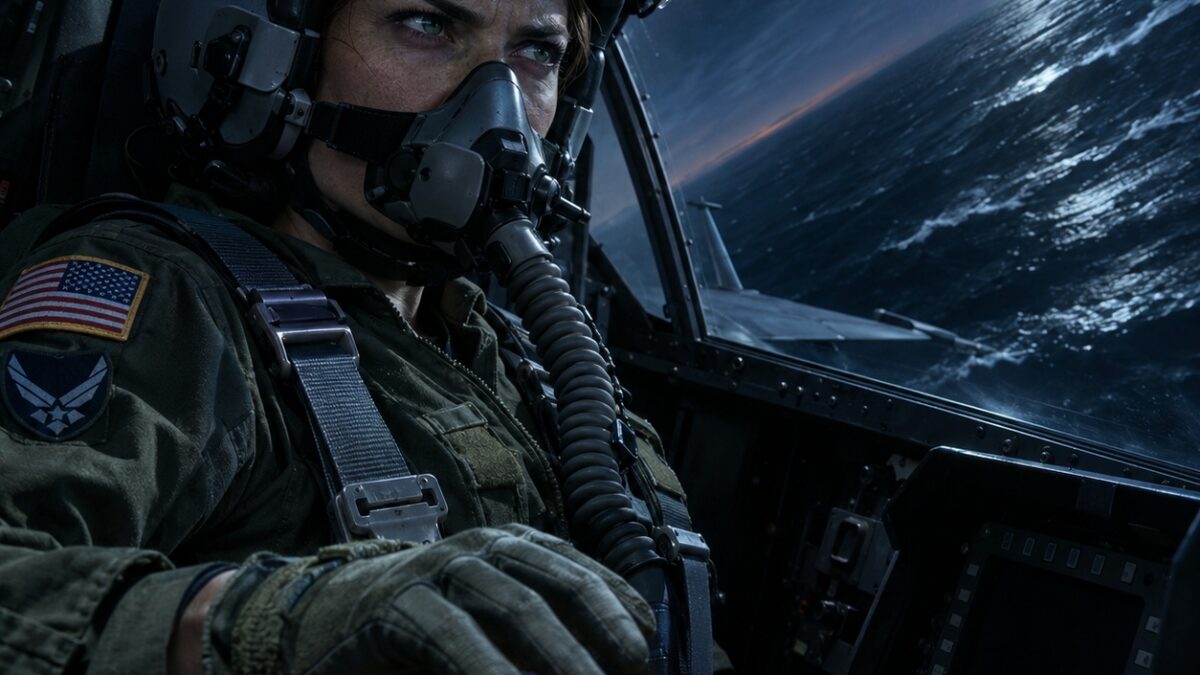
I remember the coast dropping away beneath me. Once we were over water, Rook slid into view on my right. His wing light looked like a porch light from a long way down a dark road. Then the first warning lit up. A second followed. A vibration came up through the seat, so deep I felt it in my teeth.
I reported the faults. Mercer came on the radio himself.
“Return to base. Ellis will take over.”
Rook had already told me he was losing ground on the drone. I asked control for the Navy’s latest estimate. A woman answered that the carrier was running out of time. Behind her, I heard somebody asking for my altitude.
“Captain Ward,” Mercer said, “you are relieved.”
Something behind me slammed hard enough to knock my head against the seat. The engine went quiet. My displays went black, and the strip of moonlight on the canopy swung sideways so fast I lost any sense of which way was down.
“Eject,” Mercer ordered.
My fingers found the handle. Then Rook’s voice broke through, high and close.
“Claire, pull it. Please.”
I had spent six months asking people to put their names beside the truth. In that cockpit, I could think of only one man who already had. Joe had signed a piece of paper saying this aircraft belonged on the ground. I’d climbed into it anyway.
I let go of the handle and reached into the dark. The last thing Rook heard from me was my radio cutting out.
Without the voices, I could hear myself breathing. Short, ugly sounds. I remember thinking that if I ever heard that recording, I’d never again mistake a steady voice for a person who felt steady.
Somewhere in the dark I found the backup power control. I remembered a line from an instructor’s notes about a failed system sometimes coming back on reserve power. Sometimes. I waited for a light. Nothing came. Outside, a pale edge of cloud kept whipping past the same corner of the canopy. I thought about Rook circling above me, staring at the water for a parachute that hadn’t opened.
Then a small light came on beside my knee.
The jet gave a lurch that drove my chin into my chest. I felt a response under my hand, faint at first, then enough to believe the aircraft could hear me again. The rotation slowed. A patch of ocean held still long enough for me to see whitecaps. I’d spent my whole career looking down at the sea and thinking how flat it was. I could see the backs of the waves now.
When the engine caught, it sounded ragged and too loud. I could have listened to it all day.
“Rook,” I said.
The radio hissed.
“Ben.”
“Where are you?” he blurted. His next words came out much quieter. “I was looking for your chute.”
“Low. Still flying. Where’s the contact?”
There was a pause. I thought he might tell me to go home. I’d have understood if he did.
“I’ve still got it,” he said.
His voice got me through the next stretch. My screens kept flickering, and every time one went blank I expected the rest to go with it. Rook stayed with the contact and kept talking. I heard the Navy come on the radio. A man on the carrier repeated a warning to the approaching aircraft, slowly enough that anyone listening could understand every word. He got silence back. I still remember the measured way he said “United States Navy” the last time. There were thousands of people aboard that ship, and one man was speaking for all of them.
When I finally had the drone in sight, it was a pinprick of light out over the water. My hand had begun to tremble. I pressed my forearm against my leg and made myself take one full breath. The jet held together long enough for me to stop it.
For a few seconds, all I knew was that the light was gone. Rook called the result. Then the carrier confirmed the threat was down, and that careful voice from the ship said, “We have you on our scope, Captain. We’ll stay with you as long as we can.”
I thanked him. It came out so softly I had to say it again.
The relief lasted until I turned for home. One of the warning lights had gone from intermittent to steady. I asked for emergency crews and got an answer from Sergeant Nina Brooks, the controller who had called for my altitude. She said the fire trucks were rolling. Then, after a pause just long enough to make me look down at the radio, she said security was rolling too.
“What for?”
Mercer answered. “You’ll shut down and remain in the cockpit. Security will take custody of your equipment.”
He said it so matter-of-factly that I almost asked which equipment. Then I looked down at the flight recorder’s cartridge. It held the warnings I’d called out, the faults the jet had registered, and Mercer’s voice saying I’d brought the trouble on myself. He could have left me alone with the paramedics and collected the cartridge later. He wanted to be sure nobody else heard it first.
Rook came up alongside me. Through his canopy, I could see him turning his helmet in my direction.
“Keep your recorder running,” I told him.
Then I switched to the emergency frequency and declared my condition. I gave my aircraft number and said the engine and cockpit systems had failed offshore. I said the crew chief had grounded the aircraft before launch and that I’d been ordered to fly it anyway. I asked whoever received the call to preserve the time and the recording. My mouth went dry halfway through. I’d practiced for my interview for weeks, imagining a pitcher of water and someone across the table taking notes. Now I was watching the fuel gauge and trying to speak clearly enough that strangers could write down my tail number.
A controller outside the base acknowledged me. Then came the voice from the carrier.
“We’ve logged your transmission, Captain Ward.”
Years later, I’d learn that the admiral had already been on his way to the ship’s operations center when I made that call. He heard the end of it from the doorway. By the time my landing gear came down, he was on the phone asking who was in charge of preserving the evidence.
The runway looked narrow. I could see the fire engines lined up along the pavement and a row of security vehicles farther down, their lights flashing in the early sun. I remember being embarrassed that I couldn’t stop shaking. I’d flown the crippled jet all the way back, and there I was hoping nobody would see what my hands were doing.
The wheels hit hard. The jet slewed and the tires screamed. I fought to keep it on the pavement until the motion finally died away. Then I sat for a second with my forehead against my glove. The aircraft ticked as it cooled. That was the first ordinary sound I’d heard since takeoff.
I took the cartridge out and zipped it into my flight suit.
Major Owen Price reached the ladder before the medics. I knew him well enough to wave to him across the commissary parking lot. I’d never seen him look so uncomfortable.
“Captain, keep your hands where I can see them.”
I did. Behind him, a young airman was staring at the flat spot on one of my tires.
“Major,” I said, “what did he tell you?”
Price hesitated. “That you’d become confused in flight and might be a danger to the people coming to help you.”
I could see how it would look from where he stood. My face was streaked with sweat. I’d just brought a damaged jet to a stop and climbed down carrying something I’d been ordered to leave behind. Mercer had given him a version of events that could explain anything I did next, including how hard I tried to explain myself.
“Ask the controller who was talking to me when I landed,” I said. “And bring the medic over. I could use a hand.”
Price glanced toward the ambulance. Then a car door slammed.
“Take the recorder,” Mercer said.
It was the first thing he said to anyone on the runway. I remember that because part of me had still been waiting for him to ask if I was hurt.
Price looked at the colonel. “Sir, I’m going to let medical see her.”
“Get the cartridge first.”
A medic stopped beside the front wheel, holding an open kit. I could see her eyes go from Mercer to Price. I thought of Joe standing beneath the jet earlier, trying to get me to hear him over the noise on the flight line. I’d been so sure then that if I got back with the evidence, I could force the truth out into the open. On the ground, with one hand holding my balance against the ladder, I realized how easily someone could unzip my pocket and walk away.
“Leave it with the captain,” a man said behind us.
Major General Peter Caldwell stepped around the nearest truck. I recognized him from the photograph on the letter scheduling my testimony. Joe Harlan was walking a few steps behind him with a plain manila folder held against his chest.
Mercer looked from Joe to Caldwell. “I wasn’t informed you were on base, sir.”
“I arrived last night. Sergeant Harlan found me in the tower.”
Joe opened the folder. I could see a crease across the top sheet where he’d folded it to fit inside a pocket. He’d written the grounding entry himself. The time was there, the aircraft number, the faults he’d been able to confirm, and his name at the bottom. Caldwell asked him to read the entry aloud. Joe’s voice caught on the aircraft number. He started the line again and got all the way through.
“The electronic record shows it was cleared,” Mercer said.
“I know,” Caldwell answered. “I have that version too.”
For the first time that morning, Mercer looked at me as if he had a question and might actually wait for the answer.
“You were given an order to return,” he said.
“Yes, sir.”
“Then why are you acting like the rules matter to you now?”
I thought of the sea coming up to meet the canopy. I thought of how badly I’d wanted someone else to decide what I should do.
“I’ll answer for staying out there,” I said. “Who answered for putting that jet on the runway?”
He looked down at Joe’s folder. I waited. So did Joe.
Caldwell directed Price to relieve Mercer of command pending investigation and escort him off the flight line. Price did it quietly. The same young airman who’d been looking at my tire opened the door for the colonel, then stood back until he got in.
When Caldwell asked for the cartridge, he had Price log it in front of me. I watched the seal go over the bag. Only then did I take my hand off the ladder. Joe caught my elbow and held on while the medic brought over a folding chair.
“I kept thinking I should’ve stood in front of the wheels,” he told me.
“I kept wishing you would.”
He let out a breath that sounded almost like a laugh. We stayed there while the sun came up over the hangars and the medic checked my eyes. Across the runway, Rook’s jet was rolling toward us. I watched until he was down to walking speed.
I gave my testimony on the day it had originally been scheduled. The investigator played Rook’s recording, including the part where he asked me to pull the handle. I asked for a break. Out in the hall, I found him sitting with two paper cups on the bench beside him. He passed me one. We drank our coffee while it was still hot.
The inquiry took months. Investigators matched the flight data against Joe’s original paperwork and the records I’d collected. They found other discrepancies beyond my jet. Mercer never returned to command the wing. The Navy put my name forward for a flying award. In the letter they sent me, somebody had tucked a note from one of the sailors aboard the carrier. His daughter had been born while he was at sea. He wrote that he’d finally gotten to hold her.
I keep that note at home. On base, the thing I see most often is a much smaller piece of paper.
The first time I flew again, Joe met me under a different jet. He’d finished his checks, but when he looked at the release sheet he frowned. There was a discrepancy he wanted another set of eyes on. An officer on the ramp called over that we were already running late.
Joe looked up at me. For a second I could see him standing beneath 214 again, his headset hanging around his neck, trying to tell me what he knew.
I climbed back down the ladder.
“Show me,” I said.
He laid the sheet flat on the wing, and we stayed there until we both knew what we were putting our names on.