At Twenty-Seven, I Spent My Last $3,000 On Forty Dead Trucks While Half The County Laughed From The Fence. Four Years Later, The Men Who Called Me Foolish Were Waiting For My Parts—But One Rebuilt Truck Nearly Destroyed Everything Before A Hidden Truth Turned My Junkyard Into An Empire.
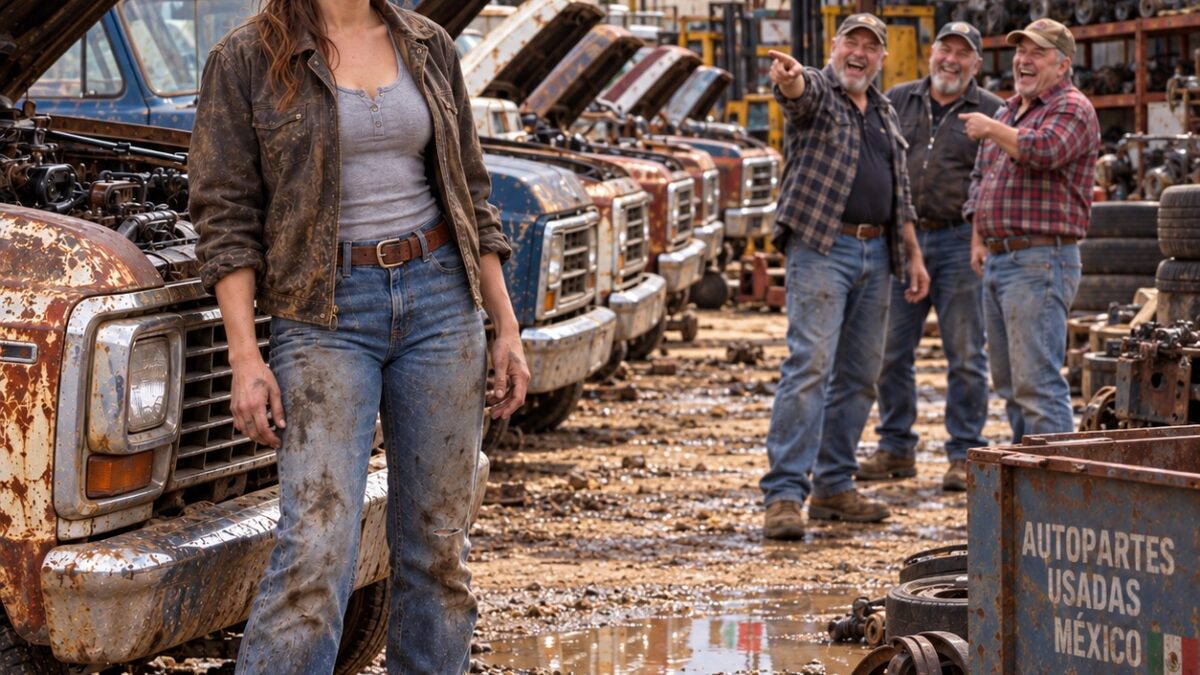
At Twenty-Seven, I Spent My Last $3,000 On Forty Dead Trucks While Half The County Laughed From The Fence. Four Years Later, The Men Who Called Me Foolish Were Waiting For My Parts—But One Rebuilt Truck Nearly Destroyed Everything Before A Hidden Truth Turned My Junkyard Into An Empire.
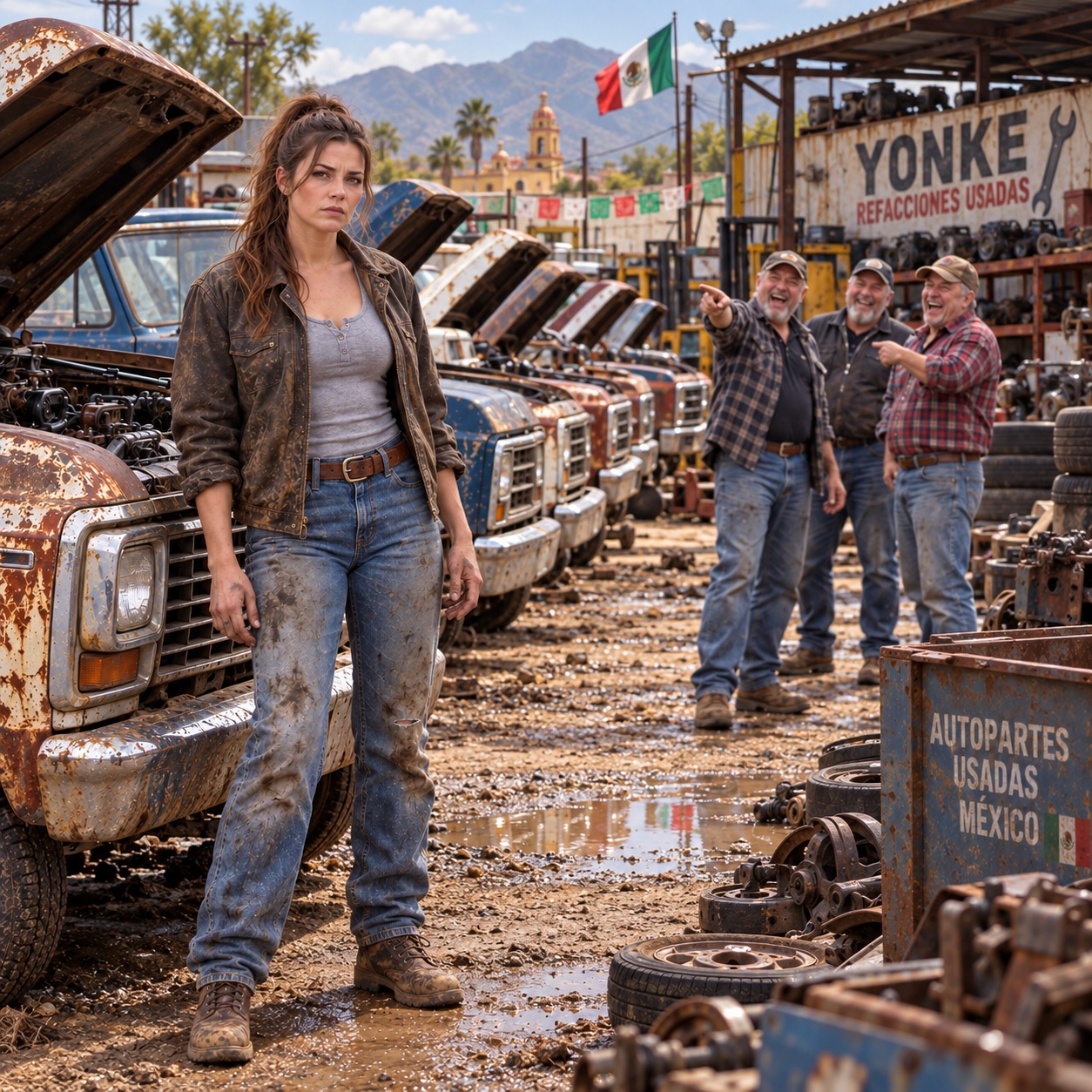
Part 2/5: My first rebuilt truck almost ruins my reputation, forcing me to choose between protecting my pride and admitting exactly how badly I failed.
I barely slept the night Nolan Baird’s truck went through that fence.
Every time I closed my eyes, I imagined the truck taking a slightly different angle down the hill, imagined another vehicle coming the opposite direction, imagined Nolan’s wife receiving a telephone call that would have begun with my name.
At sunrise, I loaded my trailer.
I drove to Nolan’s ranch before he could come looking for me.
The truck sat near his barn with wire from the broken fence still twisted around one corner of the bumper. Nolan stood beside it with both hands shoved into the pockets of his coat, so angry that his silence was more frightening than shouting would have been.
“I’ll refund every dollar,” I said.
He looked at me.
“And I’m taking the truck back.”
“You told me you’d gone through it.”
“I thought I had.”
“That isn’t what I asked.”
He was right.
I handed him sixteen hundred dollars.
That money represented almost everything I had earned during the spring, plus money I had intended to use for Jonah’s wages and a better air compressor. Nolan accepted it without satisfaction, because neither of us believed money was the important part anymore.
Back at the yard, I stripped the brake system completely.
The drums came off.
The wheel cylinders came out.
Every spring, line, adjuster, shoe, hose, and fitting was inspected, measured, replaced when necessary, recorded, and checked again.
Then I did something Dad thought was financially insane.
I returned the rebuilt truck to Nolan.
For free.
He stared at me when I left the keys in his hand.
“You already refunded me.”
“I know.”
“So what am I paying for this?”
“You already paid.”
He looked toward the truck.
“You nearly put me through a barn.”
“I put you through a fence.”
“That’s supposed to make me feel better?”
“No.”
That was the point.
There was no excuse that could repair what I had done.
I told him I had rushed because I needed the sale, that I had mistaken visual inspection for measurement, and that I would never sell another rebuilt truck under the same process.
Nolan’s anger did not disappear.
But he shook my hand before I left.
The rumors took longer.
At the feed store, Burl Kessler—who had spent months joking about my “empire”—stopped joking entirely. Somebody else started calling Wade’s old property “the death-trap yard,” and the phrase traveled farther than any advertisement I could have afforded.
Mavis called me.
Her voice was measured.
“What happened?”
I told her everything.
Not the shortened version.
Everything.
She was quiet for several seconds.
“Are the parts I have from you safe?”
“Yes.”
“Can you prove it?”
I looked at the notebooks covering my desk.
“Yes.”
That question became the second rule of my business.
Proof mattered more than confidence.
From then on, every rebuilt vehicle received a documented inspection sheet.
Brakes were dismantled and measured.
Steering components were checked for play.
Tires were inspected for tread depth, age, sidewall cracking, and dry rot.
Brake lines were checked end to end.
Lights, signals, belts, hoses, fluid levels, wheel bearings, suspension components, charging systems, and emergency brakes were tested.
If I could not document a test, I considered the test unfinished.
The paperwork slowed us down.
That was fine.
Being slow was cheaper than being wrong.
For months, money remained tight.
I stopped paying myself unless every other bill was covered.
Jonah offered to reduce his hours, but I refused because I had asked him to trust the business, and I did not intend to make him pay for my mistake.
Dad began appearing more often.
He never said he was helping because I was struggling.
He simply started arriving with coffee and finding something that needed repair.
One morning, he found me staring at two overdue invoices.
“You quitting?” he asked.
“No.”
“Then quit staring at paper like it’ll fix itself.”
That was Dad’s version of encouragement.
We worked.
Gradually, orders returned.
Mavis kept buying from me because I showed her the new inspection and testing procedures instead of asking her to believe promises. Everett continued sending neighbors because the starter I had installed months earlier still worked every morning.
Nolan kept the rebuilt truck.
That mattered more than I realized.
One cold afternoon, I drove past his ranch and saw it hauling fence posts across a field.
I pulled onto the shoulder just to watch.
He noticed me and raised one hand from the steering wheel.
That was all.
I drove away with tears in my eyes.
By the end of the year, “Ellison tested” had begun to mean something around the county.
Customers learned that my A-grade alternator cost more than an unknown salvage-yard alternator because I could show the output test.
They learned that if I said a transmission had wear between second and third, I wasn’t trying to scare them away from buying it.
I was telling them what they were purchasing.
That honesty sometimes cost me sales.
It also brought customers back.
The seven rebuild candidates from Wade’s original field slowly became functioning trucks.
Some required months.
One old flatbed tortured me with an ignition failure that led to a wiring problem, which led to a mouse-damaged harness hidden behind the dashboard.
I spent almost three weeks fighting that truck.
By the time it started, I understood automotive electrical systems better than any classroom had ever taught me.
It sold for eleven hundred dollars.
On paper, the hours made the job ridiculous.
In reality, the knowledge earned money for years.
We expanded beyond Wade’s forty trucks.
Farm auctions became my hunting ground.
I stopped buying anything just because it was cheap.
I inspected frames, titles, engine condition, transmission condition, and component compatibility before bidding.
Triage first.
Wrenches second.
Always.
Wade himself started calling whenever he heard about abandoned trucks on ranches or estate sales.
The man who had laughed while taking my three thousand dollars became one of my best sources.
“I know where there’s six dead Chevys,” he would say.
“How dead?”
“Your kind of dead.”
There was apparently now a difference.
Jonah became my diagnostic technician instead of my helper.
I hired a welder named Caleb Rourke, a slow-moving man with an almost supernatural ability to look at damaged metal and know whether it should be repaired, reinforced, or scrapped.
I built real shelving.
Then I built a real pole barn.
Engines sat on stands with dates, compression readings, mileage when known, and vehicle identification numbers.
Transmissions were drained, tagged, and categorized.
Every vehicle entering the property received a number painted onto the windshield before anyone touched a bolt.
The yard stopped looking accidental.
I still remembered what accidental looked like.
It looked like a truck sliding through Nolan Baird’s fence because I had been in too much of a hurry to remove four brake drums.
So whenever somebody complained that our inspections took too long, I told them the same thing.
“You can have fast, or you can have mine.”
Most chose mine.
The few who did not were free to leave.
Two years after the accident, Burl Kessler walked into my office.
He removed his cap, turned it in his hands, and asked whether I had a half-ton pickup available.
I almost laughed.
“The truck empire finally good enough for you?”
His face tightened.
“I probably earned that.”
I sold him one anyway.
He drove it for ten years.
But what Burl did not tell me that day—and what I would not learn until much later—was that somebody outside my yard had already begun quietly recording every decision I made after Nolan’s accident.
That record would eventually become worth more to my company than any engine sitting on my shelves.
Part 3/5: The junk field becomes a disciplined operation as growing demand forces me to choose between expanding quickly and protecting the standards I built from failure.
By the beginning of my third year, the old Pritchard field no longer resembled the place where people had laughed at me.
Gravel covered the mud between organized rows, the pole barn had two working bays, and shelves once built from discarded pallets had been replaced with steel racks carrying hundreds of labeled components.
Nickel the magpie remained unimpressed.
He still lived near the useless 1978 pickup and continued stealing anything reflective enough to attract his attention.
Caleb once accused Jonah of losing a socket.
Jonah pointed toward Nickel.
Caleb searched the bird’s glove-box vault and found three sockets, seven washers, a chrome tire gauge, two hose clamps, and the missing key to my mother’s garden shed.
Nobody understood that last one.
Business grew because farmers talked.
A rancher who saved two hundred dollars on a tested alternator remembered my name.
A contractor whose thirty-year-old flatbed stayed running through an entire fencing season told his brother.
A livestock hauler who bought a transmission from us returned six months later for another part.
Mavis’s standing order grew from a few items each month to a pallet every other week.
Instead of asking whether I had enough customers, I began asking whether we could process enough inventory without losing control.
That scared me.
Growth looked flattering from the outside.
Inside the shop, growth meant more chances for mistakes.
I had learned that one badly tested component could erase the reputation created by fifty good ones.
So we standardized nearly everything.
Incoming vehicles received numbered inspection forms.
Removed parts were cleaned before assessment.
No employee graded his own uncertain work without a second set of eyes.
Safety-related parts received stricter rules than convenience parts.
A radio switch could be imperfect.
A steering component could not.
I also started keeping what Dad called “the cemetery.”
It was a rack filled with parts we had rejected.
Cracked steering knuckles, worn bearings, slipping transmissions, weak starters, damaged hubs, and brake components that somebody could probably have sold to an unsuspecting buyer for a few dollars.
New employees had to examine that rack.
I wanted them to understand that refusing to sell something was part of the business.
Sometimes the most valuable decision we made involved earning zero dollars.
Our rebuilt trucks became the biggest source of profit.
We were no longer restoring vehicles because they looked attractive.
We restored only trucks with solid structures, usable drivetrains, clean paperwork, and a practical working purpose.
Farmers did not need polished collector vehicles.
They needed something that started at six in the morning when the temperature dropped below freezing.
They needed brakes that worked with a trailer behind them.
They needed a heater, lights, steering, tires, and reliability.
A scratched door did not matter.
Documentation did.
By the fourth year, we had processed more than three hundred vehicles since Wade’s original forty.
Some came through the yard and disappeared as scrap within days.
Others remained for months while we harvested usable components.
A smaller number left under their own power after complete rebuilds.
Gross annual revenue crossed two hundred thousand dollars.
That number sounded enormous when I remembered arriving home with four hundred dollars.
It felt less enormous after payroll, insurance, building costs, tools, inventory purchases, fuel, taxes, and everything else required to keep the operation moving.
Still, there were now four people collecting paychecks because I had once looked at a field of rust and refused to see only rust.
Dad pretended none of this surprised him.
One Tuesday morning, I was halfway inside a transmission and held out my hand without looking.
“Five-eighths.”
A wrench landed in my palm.
Dad was standing beside me.
“You’re early.”
“You’re slow.”
I smiled.
He looked across the busy shop.
“Good field you bought.”
That was the closest Gideon Ellison would ever come to admitting he had been wrong.
It was enough.
Then Trent Mallory came through the gate.
Mallory ran a regional hauling company headquartered in Rapid City, with delivery routes stretching across Nebraska, South Dakota, and Wyoming. His fleet contained older flatbeds and box trucks because, as he put it, “New trucks spend as much time waiting on electronics as old trucks spend waiting on parts.”
He walked through my yard without saying much.
He read our inspection sheets.
He asked Jonah about load testing.
He watched Caleb measure steering play.
Then he entered my office and placed a folder on the desk.
Eleven trucks.
Six weeks.
The largest contract anyone had ever offered me.
The payment would have allowed me to buy a commercial hydraulic lift, upgrade our diagnostic equipment, and hire two more employees immediately.
For several seconds, all I could see was expansion.
Then I looked at the deadline.
I knew our capacity.
A proper rebuild took us approximately nine or ten working days depending on condition and parts availability.
Mallory wanted a finished truck roughly every four days.
“Can’t do it,” I said.
He thought I meant the price.
“What needs changing?”
“The schedule.”
“I need them in six weeks.”
“Then you need another shop.”
He leaned back.
“You haven’t even looked at the trucks.”
“I don’t need to.”
I explained the inspection process.
Brakes came apart.
Steering was measured.
Suspension was checked.
Electrical systems were tested.
If a vehicle needed more work than expected, the schedule moved.
Mallory tapped the folder.
“Other shops can do it.”
“Then use them.”
My stomach hurt while I said it.
That contract was more money than I had ever refused.
Mallory studied me for so long I thought I had offended him.
Finally, he asked, “What’s your schedule?”
“Twelve to fourteen weeks for all eleven, assuming we don’t find major frame problems.”
He nodded once.
“Do it.”
I blinked.
“You said six.”
“I wanted six.”
“What changed?”
“You did.”
He closed the folder.
“You’re the first shop I’ve talked to that turned down my money before even seeing the trucks.”
He stood.
“That tells me what happens when you find something I don’t want to hear.”
Mallory’s eleven trucks arrived over the following month.
We found cracked hoses, worn steering joints, deteriorated brake lines, hidden corrosion, weak wheel bearings, and one frame that Caleb rejected entirely.
Mallory complained exactly once.
I sent him photographs.
He stopped complaining.
The contract took almost fourteen weeks.
He paid every invoice.
The following year, he sent four more trucks.
Then three.
Then five.
His company became our largest commercial account.
People around Valentine started calling my business Ellison Work Truck & Salvage even though I had never officially decided on a name.
Eventually, I put those words on the invoices.
I refused to put my face on anything.
Mavis said that was stupid marketing.
Dad said people already knew my face.
I said trucks did not care.
The men who had laughed from Wade’s fence gradually became customers.
Wade found inventory.
Burl bought a pickup.
Others came looking for parts.
Nobody apologized dramatically.
Rural Nebraska did not operate that way.
They simply stopped laughing.
That felt better.
But I still wondered about one thing.
Trent Mallory had claimed he chose us because I refused his deadline.
Years later, I would discover that was only partly true.
He had already decided to find me before he ever drove through the gate.
And the reason traced back to the single worst truck I had ever sold.
Part 4/5: Success finally reaches the yard, but an unexpected revelation shows me my greatest failure—not my best repair—may have created my biggest opportunity.
Four years after I counted three thousand dollars into Wade Pritchard’s hand, I arrived at the yard before sunrise and sat inside my truck for a moment without opening the door.
The old field was almost unrecognizable.
Where dead trucks had once leaned into weeds, gravel lanes now ran between organized rows.
The corn shed still stood, although the faded wall where I had first written REBUILD, PARTS, and SCRAP had been preserved behind clear panels because Jonah thought we should remember where the system started.
The pole barn had a hydraulic lift.
We had proper diagnostic equipment.
Four people worked full-time, including me, and we used several part-time drivers whenever we needed vehicles hauled from auctions.
The numbers had become large enough that Mom stopped asking whether I had remembered to pay the electric bill.
She started asking whether I had remembered to eat lunch.
Some worries never disappeared.
That spring, we pulled an engine from a pickup that had sat beneath cedar trees for eleven years.
Its former owner had called the truck hopeless.
Jonah wanted to part the engine.
I wanted to diagnose it.
The fuel system was filthy.
Several grounds were corroded.
The ignition needed work.
But compression was surprisingly good.
We cleaned, replaced, tested, adjusted, and finally connected a fresh battery.
The engine caught on the second crank.
It settled into a steady idle.
I placed one hand on the fender and listened.
That sound carried me backward four years.
I remembered the frost.
The laughter.
Wade folding my money into his pocket.
Dad telling me I had purchased forty problems.
I remembered being alone in the same field at night when another forgotten engine started after years of silence.
I remembered Nolan’s damaged fence.
That memory still had the power to tighten my chest.
Nobody had been injured, yet success had never erased the knowledge that somebody could have been.
I kept Nolan’s original inspection sheet in my office.
It had almost nothing written on the brake section.
Just one careless word.
“Good.”
Whenever a new employee questioned why our documentation was so detailed, I showed them that sheet.
“This is what guessing looks like,” I said.
Then I showed them the forms we used now.
“This is what knowing looks like.”
That afternoon, Trent Mallory arrived unexpectedly.
He had no truck with him.
He carried a cardboard tube and an old envelope.
“Got coffee?” he asked.
“For customers.”
“I’m your best customer.”
“Then you can afford your own.”
I poured him some anyway.
Mallory leaned against my desk while I finished an invoice.
“You ever wonder how I found you?”
“Mavis’s husband.”
“That what I told you?”
“Something like that.”
He smiled.
“Mavis’s husband mentioned you later.”
He placed the envelope in front of me.
“But this came first.”
My name was written across the front.
The handwriting looked familiar.
I opened it.
Inside was a photocopy of a letter dated almost two years earlier, addressed to Mallory’s hauling company.
The writer was Nolan Baird.
For several seconds, I could not understand what I was reading.
Nolan described purchasing a rebuilt truck from me.
He described the brake failure.
He described going through the fence.
My face grew hot.
Then the letter continued.
He wrote that I had arrived before sunrise the next morning.
That I refunded every dollar without argument.
That I removed the vehicle.
That I rebuilt the complete braking system.
That I returned the truck to him without charging anything.
Then came the sentence that stopped me.
“If you ever need a shop, don’t judge Mara Ellison by the mistake she made on my truck. Judge her by what she did after she learned she’d made it.”
I read it twice.
Mallory watched silently.
“Why did he send this to you?”
“He knew one of my drivers.”
I looked back at the page.
Mallory continued.
“Most shops send me brochures telling me how good they are.”
He tapped Nolan’s letter.
“Nobody sends letters describing how they failed.”
My throat tightened.
“You knew before you came.”
“I knew you had made a serious mistake.”
“And you still offered me eleven trucks?”
“I wanted to know whether the letter was true.”
“So the six-week deadline—”
“Was a test.”
Anger flashed through me.
“You tried to make me cut corners.”
“I offered you a reason to.”
“That isn’t better.”
“No.”
At least he had the sense not to defend it.
Mallory nodded toward the shop.
“You said no.”
I looked again at Nolan’s handwriting.
The accident I had spent years wishing I could erase had brought the largest customer in my company’s history through my gate.
Not because Nolan thought I had done nothing wrong.
Exactly the opposite.
He trusted what I had done afterward.
The realization was uncomfortable.
I had built much of my identity around never repeating that failure.
Now I understood that the failure itself had become part of my reputation—not as proof that I was careless, but as proof that when something went wrong, I did not hide from it.
Mallory took his coffee.
“Baird still driving that truck?”
“Last I heard.”
“He is.”
“How do you know?”
“He hauled a load for us last month.”
I laughed despite myself.
“He ever tell you he wrote this?”
“No.”
“Why give it to me now?”
Mallory shrugged.
“Figured you’ve punished yourself long enough.”
After he left, I drove to Nolan’s ranch.
He was repairing a gate.
The rebuilt truck sat nearby, paint faded, bed scratched, still working.
I held up the letter.
“You could have told me.”
He examined it and went back to tightening a hinge.
“You needed customers, not compliments.”
“You recommended me to Mallory.”
“I told the truth.”
“You told him my brakes failed.”
“They did.”
“You also told him to hire me.”
He finally looked at me.
“You came back.”
That simple sentence landed harder than praise.
Nolan wiped his hands.
“Everybody’s good when the job goes right, Mara.”
He glanced at the truck.
“I wanted to know what kind of shop you’d be when it went wrong.”
I understood then why that old inspection form belonged on my office wall.
It was not there to shame me.
It was there because the worst day in my business had written the rule that protected every truck afterward.
But Nolan’s letter was not the only surprise waiting for me that year.
Wade Pritchard had one more piece of paper connected to the original forty trucks.
And when he brought it into my office, I thought he was making another joke.
He wasn’t.
Part 5 (THE END): The field everyone called worthless delivers one final surprise, while I discover the real fortune was hidden in a decision nobody else understood.
Wade arrived in October carrying a battered metal cashbox.
He set it on my desk and asked whether I remembered the grain hauler parked against the north fence when I bought his forty trucks.
“I remember all forty.”
“Even number thirty-seven?”
I knew exactly which one.
Number thirty-seven had been one of the worst vehicles in the field, an enormous faded-red grain truck with a seized engine, rotten wooden bed boards, cracked tires, and enough rust on the cab to discourage optimism.
We had stripped several usable pieces from it.
The remains had gone to scrap years earlier.
Wade opened the box.
“My brother finally cleaned out Dad’s old house.”
“That sounds dangerous.”
“Found paperwork.”
He handed me a folded document.
It was the original purchase invoice for truck thirty-seven.
I still did not understand.
Then Wade pointed at a line near the bottom.
The truck itself was ordinary.
What had been mounted on it was not.
According to the invoice, thirty-seven had once carried a specialized heavy-duty auxiliary hydraulic assembly ordered for municipal snow equipment before the truck was resold to Wade’s father.
Most of that equipment had disappeared long before I purchased the field.
But the invoice listed the manufacturer’s serial numbers.
One number looked familiar.
I stood so quickly my chair rolled into the wall.
“Wait.”
Wade followed me into the parts building.
On an upper rack sat an ugly hydraulic unit we had removed from number thirty-seven during my first winter.
I had nearly scrapped it.
Instead, Dad had stopped me.
“Too heavy to throw away before you know what it is,” he had said.
So I cleaned it, tagged it C-grade because I could not properly test it, recorded the casting numbers, and stored it.
For four years, nobody had purchased it.
Jonah used to joke that it was our most expensive shelf decoration.
I climbed the ladder and wiped dust from the data plate.
The serial number matched.
Wade scratched his jaw.
“That good?”
“I don’t know.”
That was the only honest answer.
I spent the next week researching.
The company that built the unit no longer existed under its original name, but its successor did.
They connected me with an equipment restoration firm in Colorado.
The specialist asked for photographs.
Then more photographs.
Then measurements.
Then he called.
The hydraulic assembly was not worth millions.
It was worth something better.
It was useful.
Only a small number of that particular industrial unit had been produced, and municipalities still operating compatible legacy snow-removal equipment had difficulty sourcing replacements.
A refurbished unit could sell for more than thirty thousand dollars.
I sat staring at the telephone.
Wade began laughing.
“Three thousand for forty trucks.”
“Don’t start.”
“You paid me three grand.”
“I remember.”
“And one part’s worth ten times that.”
“After rebuilding.”
“Still counts.”
But the surprise did not transform the business.
That mattered to me.
We rebuilt the unit carefully.
We replaced seals, inspected the pump, measured wear, tested pressure, documented every specification, and sold it through the Colorado firm to a county maintenance department for thirty-four thousand six hundred dollars.
After costs, the profit helped me buy the remaining acreage around the yard.
No miracle check created Ellison Work Truck & Salvage.
By then the company already existed.
The money simply allowed the business to own the ground beneath it.
That felt appropriate.
The most valuable forgotten part in Wade’s entire field had spent four years sitting above my shelves because I had followed the same principle that started everything.
Do not call something worthless until you understand what it is.
The morning after we closed on the land, Dad arrived before me.
He stood outside the gate holding two cups of coffee.
“You’re trespassing,” I told him.
“On your land?”
“Exactly.”
He handed me a cup.
We looked across the property.
The original forty trucks were gone.
In their place stood rows of current inventory, customer vehicles, the pole barn, parts storage, our office, a fenced scrap area, and the useless old 1978 pickup that remained solely because Nickel would probably declare war if anyone attempted to move it.
The bird was sitting on the mirror.
Something shiny hung from his beak.
“My ten-millimeter?” I asked.
Dad squinted.
“Looks like it.”
“I bought this whole place and still can’t control one bird.”
“Management problem.”
Mom arrived twenty minutes later with enough breakfast sandwiches for twelve people despite our crew being half that size.
Mavis stopped by before lunch.
Nolan dropped off a steering box he wanted us to examine.
Burl arrived in the rebuilt pickup he had once been embarrassed to buy from me.
Wade brought another auction lead.
The yard operated like any normal business.
That was the strangest achievement of all.
Four years earlier, nothing about it had been normal.
I had been twenty-seven, broke, recently abandoned, half-trained, back inside my parents’ house, and desperate enough to spend almost every dollar I possessed on machines everyone else had stopped seeing as machines.
People liked the final numbers when they told the story later.
Forty trucks.
Three thousand dollars.
Hundreds of vehicles processed.
More than two hundred thousand dollars in annual revenue.
A thirty-four-thousand-dollar forgotten hydraulic assembly.
Those numbers made the story sound like a treasure hunt.
It wasn’t.
Most days were dirty.
Most profits were small.
Most breakthroughs involved diagnostic work nobody saw.
An alternator producing the correct voltage.
A transmission holding under torque.
A frame passing inspection.
A wheel cylinder not leaking.
A customer returning because the last part worked.
The empire Wade jokingly predicted did not rise from discovering valuable objects hidden in worthless trucks.
It rose from refusing to use the word worthless too quickly.
There is an important difference.
I learned it about machines first.
Later, I understood it applied to people.
When my dealership job disappeared, I thought my career had stopped.
When my fiancé left, I thought I had been reduced somehow.
When I moved home, I thought every person who saw me in town could see the word failure printed across my forehead.
Then I bought a field full of vehicles everybody else had already judged.
The trucks did not need encouragement.
They needed diagnosis.
Some were finished.
Some were damaged beyond reasonable repair.
Some had one failed component hiding inside an otherwise useful machine.
The trick was not pretending everything could be saved.
The trick was finding out what was actually true before making the decision.
That lesson eventually became more valuable than any part I sold.
Late that afternoon, everyone left except Dad and me.
We had an old diesel on the test stand.
It had come from a ranch sixty miles away, where it had sat untouched for almost a decade after somebody concluded the engine was ruined.
We replaced two damaged electrical connections, serviced the fuel system, tested compression, and checked everything twice.
I turned the key.
The engine fired.
Not immediately.
It coughed once.
Then again.
On the third attempt, it caught and settled into a heavy, steady rhythm that filled the barn.
Dad leaned against the workbench.
I kept my hand on the engine stand.
There are sounds you hear with your ears.
There are others you feel somewhere deeper.
That engine sounded like frost under my boots in Wade’s field.
It sounded like the first thirty-five-dollar starter.
It sounded like Nolan’s truck returning after I rebuilt the brakes correctly.
It sounded like Jonah’s first paycheck.
It sounded like Mallory accepting my schedule.
It sounded like thirty-four thousand dollars sitting unnoticed on a shelf for four years.
Mostly, it sounded like proof.
Dad nodded toward the engine.
“Good one.”
“Yeah.”
He looked outside at the yard.
“Good field, too.”
I smiled.
“You’ve said that before.”
“Don’t get used to it.”
Nickel landed on the open hood beside us and dropped something metallic.
My missing socket bounced once and rolled toward Dad’s boot.
He picked it up.
“Bird finally paying you back.”
“After four years?”
“Interest takes time.”
I laughed.
Then Dad reached into his jacket.
He removed a yellowed newspaper clipping.
The headline announced the closure of the dealership where I had once expected to begin my career.
Dad had saved it.
On the back, in his handwriting, was a date.
The date I bought Wade’s field.
Beneath it were six words.
Best thing she never got.
I looked at him.
“You wrote this then?”
He shrugged.
“You told me buying those trucks was a terrible idea.”
“It was.”
“You thought it would work?”
“No.”
“Then what does this mean?”
Dad looked toward the running engine.
“It means that job closing brought you home.”
For once, neither of us had anything smart to say.
The final twist was not that one forgotten hydraulic unit had been worth more than the price of all forty trucks.
It was not that Nolan’s warning letter had secretly brought me the largest commercial account I would ever have.
It was that the two events I had considered the worst breaks of my twenties—the job disappearing and my life collapsing afterward—had pushed me toward the field I never would have noticed otherwise.
If the dealership had stayed open, I would have taken that job.
I would have repaired somebody else’s trucks.
I would have collected somebody else’s paycheck.
And Wade Pritchard’s forty dead vehicles would probably have been crushed for scrap.
Instead, I owned the ground where they once stood.
The business had my name on it.
The inspection system had my handwriting behind it.
And four people besides me made their living there.
I folded Dad’s clipping and placed it beside Nolan’s letter in the top drawer of my desk.
One document reminded me that failure could redirect a life.
The other reminded me that mistakes could define character without destroying it.
The old one-word brake inspection stayed on the wall.
I kept that too.
I wanted all three.
The opportunity.
The failure.
The response.
Together, they told the truth better than any success story ever could.
People still asked how I turned three thousand dollars into a truck business.
They expected some secret about auctions, salvage margins, or rare parts.
I usually told them there was no secret.
I crawled underneath forty trucks with a flashlight before deciding what they were.
Then I kept doing the same thing with every problem that came through my gate.
Look first.
Measure.
Test.
Tell the truth.
Fix what can be fixed.
Walk away from what cannot.
Never confuse speed with progress.
And never call something worthless because somebody else got tired of asking questions.
The engine continued idling as evening settled across the Nebraska grasslands.
Dad closed the shop doors halfway, Mom would have supper waiting, Jonah would be back before seven the next morning, and another fully inspected work truck was scheduled to leave for a ranch near Gordon on Thursday.
Outside, Nickel returned to his old pickup with something shiny in his beak.
I didn’t chase him.
Some things belonged exactly where they had ended up.
I stood beside the engine for another minute and listened.
Four years earlier, forty dead trucks had been rusting in that field.
Everybody else heard silence.
I heard inventory.
I had been right about that.
But I had been wrong about one thing.
I thought the trucks were what needed a second chance.
It turned out I had bought one for myself.
PARTE 2
Porque aquella mañana, cuando Arturo salió del taller con su camioneta recién reparada…
a menos de un kilómetro de mi negocio…
los frenos dejaron de responder.
Y cuando vi aquella camioneta cruzar la carretera sin poder detenerse…
entendí que mi sueño podía terminar en ese mismo instante.
Corrí hacia mi camioneta sin pensar.
No recuerdo exactamente cómo llegué hasta donde estaba Arturo.
Solo recuerdo verlo bajar del vehículo con el rostro pálido, mirando la camioneta como si ya no confiara en ella.
La parte trasera había quedado atrapada contra una cerca de madera.
No había ocurrido una tragedia.
Nadie resultó herido.
Pero eso no quitaba el peso que sentí en el pecho.
Porque la realidad era simple.
Yo había entregado ese vehículo.
Yo había dicho que estaba listo.
Y había fallado.
Arturo me miró durante varios segundos.
“Valeria… ¿qué pasó?”
No tenía una respuesta que pudiera arreglarlo.
No podía decirle que había sido mala suerte.
No podía culpar a una pieza vieja.
No podía esconderme detrás de una excusa.
Así que hice lo único que podía hacer.
Le dije la verdad.
“Cometí un error. Voy a devolverte todo tu dinero y voy a llevarme la camioneta”.
Arturo esperaba una explicación.
Pero no le di una.
Porque ninguna explicación iba a cambiar lo que había pasado.
Esa misma tarde cargué la camioneta y la llevé de regreso al taller.
Mi padre me encontró sentada frente al vehículo cuando ya había oscurecido.
Durante mucho tiempo no dijo nada.
Finalmente preguntó:
“¿Vas a rendirte?”
Miré la camioneta.
“No lo sé”.
Él se sentó a mi lado.
“Entonces no decidas hoy”.
Aquella frase parecía sencilla.
Pero fue exactamente lo que necesitaba escuchar.
A la mañana siguiente desmonté todo el sistema de frenos.
No revisé.
No supuse.
No imaginé.
Desarmé cada pieza.
Encontré el problema.
Un componente que parecía estar bien por fuera tenía un desgaste interno que yo no había detectado.
El error había sido mío.
Había confiado demasiado en mirar.
Y había olvidado que un vehículo no se revisa con los ojos.
Se revisa con mediciones.
Ese día cambié la manera en que trabajaba.
Creé una regla que jamás volví a romper.
Ninguna camioneta saldría de mi taller si yo no podía demostrar exactamente qué había revisado.
Comencé a crear hojas de inspección.
Frenos.
Dirección.
Suspensión.
Sistema eléctrico.
Motor.
Transmisión.
Cada detalle quedaba registrado.
Al principio eso hizo que mi trabajo fuera más lento.
Mucho más lento.
Algunos clientes se molestaban.
“Antes los talleres entregaban rápido”.
Yo respondía:
“Yo prefiero tardar más y entregarte algo seguro”.
Algunos se iban.
Pero otros se quedaban.
Y esos fueron los que cambiaron mi futuro.
Arturo fue uno de ellos.
Después de terminar nuevamente su camioneta, fui hasta su casa.
Le entregué las llaves.
“No te cobraré nada más”.
Me miró sorprendido.
“Pero ya pagué”.
“Pagaste por una camioneta que debía estar lista desde el principio”.
Arturo observó el vehículo.
Después me miró a mí.
“No estoy feliz por lo que pasó”.
“Lo entiendo”.
“Pero estoy viendo algo que muchos talleres no hacen”.
“¿Qué?”
“Admitir cuando se equivocan”.
No fue una reconciliación inmediata.
No fue una escena perfecta.
Pero antes de irme, Arturo me dio la mano.
Y para mí significó mucho.
Porque entendí algo importante.
La confianza no se construye cuando todo sale bien.
Se construye cuando algo sale mal y decides enfrentar las consecuencias.
Durante los siguientes meses trabajé más que nunca.
Seguía teniendo miedo.
Cada vez que entregaba una camioneta sentía una pequeña presión en el pecho.
Pero ese miedo me mantenía atenta.
No me permitía volver a cometer el mismo error.
Tomás comenzó a trabajar conmigo tiempo completo.
Mi padre empezó a ayudarme más seguido.
Aunque jamás lo admitió, creo que estaba orgulloso.
Un día llegó con una caja de herramientas vieja.
“Era de tu abuelo”.
La abrí.
Dentro había llaves, pinzas y herramientas gastadas por décadas de uso.
“¿Por qué me la das?”
Porque ahora tienes algo que cuidar.
No supe qué responder.
Pero guardé esa caja en el taller.
Porque representaba algo más que herramientas.
Representaba una historia.
Con el tiempo, las personas comenzaron a hablar del negocio.
Pero ya no decían:
“Es la mujer que compró cuarenta camionetas inútiles”.
Ahora decían:
“Es el taller donde revisan todo dos veces”.
Esa frase valía más que cualquier anuncio.
Los vehículos comenzaron a llegar.
Rancheros.
Pequeños empresarios.
Personas que necesitaban una camioneta de trabajo sin pagar una fortuna.
Yo no vendía vehículos perfectos.
Vendía vehículos honestamente revisados.
Y esa diferencia cambió todo.
Dos años después de comprar aquel terreno, ya no parecía un cementerio de metal.
Había filas organizadas.
Piezas clasificadas.
Un pequeño almacén.
Tres empleados trabajando conmigo.
Y todavía conservaba la primera pickup azul que había logrado arrancar.
Nunca la vendí.
Algunas personas me preguntaban por qué.
“Es una camioneta vieja”.
Yo sonreía.
“Precisamente por eso”.
Porque esa camioneta me recordó que muchas cosas parecen terminadas solamente porque nadie tuvo paciencia para entenderlas.
Pero la sorpresa más grande llegó casi cuatro años después.
Una tarde llegó un hombre llamado Enrique Robles.
Era dueño de una empresa de transporte que trabajaba entre San Luis Potosí, Guanajuato y Querétaro.
Había escuchado sobre mi taller.
Caminó por el lugar durante casi una hora.
No preguntó cuánto costaban las cosas.
Preguntó cómo trabajábamos.
Observó nuestras hojas de inspección.
Miró cómo Tomás revisaba una transmisión.
Después entró a mi oficina.
Colocó una carpeta sobre el escritorio.
“Quiero que trabajes con mi empresa”.
Abrí la carpeta.
Era un contrato para reparar y preparar doce camionetas de trabajo.
Era el proyecto más grande que había recibido.
El dinero podía cambiar completamente mi negocio.
Podía comprar más herramientas.
Contratar más personas.
Crecer.
Pero cuando revisé la fecha límite, sentí algo extraño.
El tiempo era demasiado corto.
“Necesito todas listas en cinco semanas”, dijo Enrique.
Respiré profundamente.
Cuatro años antes habría aceptado sin pensar.
Habría querido demostrarle a todos que podía hacerlo.
Pero esa versión de mí había aprendido una lección.
“No puedo hacerlo en cinco semanas”.
Enrique levantó la mirada.
“¿No quieres el contrato?”
“Sí quiero”.
“Entonces hazlo”.
“No si significa hacer un trabajo rápido y arriesgado”.
Hubo silencio.
Pensé que acababa de perder la oportunidad más grande de mi vida.
Pero Enrique sonrió.
“Ahora entiendo por qué te recomendaron”.
“¿Quién?”
Sacó una hoja de la carpeta.
Era una carta.
Y cuando vi el nombre escrito arriba, sentí que el tiempo se detenía.
Era de Arturo.
El mismo hombre cuya camioneta casi destruyó mi reputación años atrás.
En la carta decía:
“Si busca un taller que nunca cometa errores, no existe. Pero si busca uno que responda cuando algo sale mal, busque a Valeria Mendoza”.
Leí esas palabras varias veces.
Porque después de tantos años intentando olvidar aquel día…
descubrí que justamente ese momento que más me había avergonzado…
era la razón por la que alguien había decidido confiar en mí.
Enrique cerró la carpeta.
“No necesito alguien que me prometa que nada saldrá mal”.
Miró alrededor del taller.
“Necesito alguien que no huya cuando algo salga mal”.
Ese día firmamos el contrato.
Pero la verdadera victoria no fue el dinero.
Fue entender que aquella joven que compró cuarenta camionetas oxidadas no estaba intentando reparar vehículos.
Estaba intentando repararse a sí misma.
Meses después, regresé al terreno donde todo comenzó.
La vieja cerca seguía ahí.
El mismo lugar donde mi padre pensó que había cometido el peor error de mi vida.
Me quedé mirando aquel espacio vacío.
Porque ya no quedaban camionetas abandonadas.
Solo quedaban recuerdos.
Recordé la vergüenza.
El miedo.
Las noches preguntándome si había tomado la decisión equivocada.
Y entonces comprendí algo.
Todos habían visto cuarenta vehículos viejos.
Yo también.
Pero también vi una oportunidad.
No porque fueran perfectos.
Sino porque todavía tenían algo que ofrecer.
Años después, muchas personas me preguntan cómo logré convertir sesenta mil pesos en un negocio exitoso.
Esperan una respuesta complicada.
Algún secreto.
Alguna estrategia especial.
Pero la verdad es mucho más sencilla.
Aprendí a no juzgar algo demasiado rápido.
Ni una camioneta.
Ni una oportunidad.
Ni una persona.
Porque algunas cosas no están acabadas.
Solo necesitan a alguien dispuesto a mirar más profundo.
Hoy, cuando cierro las puertas de mi taller al final del día y escucho los motores arrancar después de meses o años de silencio, recuerdo aquella primera pickup azul.
La primera que me enseñó que algo abandonado todavía podía volver a funcionar.
Y también recuerdo algo más.
Durante mucho tiempo pensé que yo había comprado cuarenta camionetas viejas para darles una segunda oportunidad.
Pero estaba equivocada.
Ellas fueron las que me dieron una segunda oportunidad a mí.